< PREVIOUS
II
Migration
Migration
Oour family had come to Virginia in about 1650, perhaps to seize an opportunity
offered by the exiled monarch, perhaps to escape the Puritan
Roundheads (or maybe both). The first of whom I have definite record settled just above the mouth of the Corotoman River (see the previous chapter). He had a tough time of it and died in his early forties. Perhaps he married the Virginia girl Mary Travers. We know that she
survived him
by no more than three years, because his elder son was appointed as administrator of her estate in 1672
. This was George.
He was able to
expand the family's holdings, and served as
County Justice during the 1680s and '90s. He married
the daughter of a Captain John Rogers. They had three children.
The family had lived not entirely without luxury. Crowe (p. 6) tells us that Nicholas's younger son, another Nicholas, played the violin. This youth eventually moved to Maryland. Generations after him long continued to name a son Nicholas, so that to avoid confusion I distinguish them in these pages by region. Although the family remained anchored in Baltimore County, Maryland for several more generations, we can call this first one to move there
Nicholas of Baltimore (1656-1729)
This second American Nicholas registered his own mark for cattle and hogs in Lancaster County before he had completed his tenth year. That may be revelatory not only of priorities at a wilderness frontier, but may tell us also about the responsibilities laid upon one's shoulders at such an early age. Nicholas had just turned eight in the year of the comet, a phenomenon generally recognized as ominous. This one was followed first by an unprecedented infestation of pigeons, then by renewed Indian attacks. Governor William Berkeley insisted on careful diplomacy with the Indians, vetoing any except passive resistance to their onslaughts. To this end he had stockades built on the larger plantations. According to some, spending tax money in this way constituted ineffectual protection, mainly for the wealthy, but paid for by the labor of the poor. A young, newly arrived aristocratic firebrand, Nathaniel Bacon, claimed the governor was coddling the Indians to save his own investments in fur trading. Many agreed with Bacon, so that he was able to rouse highly successful excursions against the Indians. This gained him immense popularity among the common people, but the enmity of vindictive, unpopular old Governor Berkeley.
Nathaniel Bacon may have been saved from hanging only by his early death from disease and exposure in October, 1676. Historians (who like to choose sides) are divided about what they call "Bacon's Rebellion." Some call it a proper Revolution and praise the Long Assembly of 1675 for anticipating measures taken by the Continental Congress a century later. Other historians deny Bacon credit for that, and emphasize the prudence of old Governor Berkeley. In any case, the rapidity with which Bacon was able to raise his rabble army, the sheer size of it, and its initial successes cast a stark light on the desperate conditions still prevailing along the James River as the seventeenth century drew to an end.
Young Nicholas Haile was twenty years old during Bacon's Rebellion, scarcely ten years younger than Bacon. One naturally wonders what such an age difference might have meant to young men in those days. One could guess that Nicholas and his neighbors on the Corotoman were as enthusiastic about the dashing, courageous, and brilliant Bacon as were the impoverished rebels on the James River. Both young men were royalists, but Nicholas probably shared Bacon's grievances against the royal governor--if Nicholas was still engaged in tobacco farming at all.
But actually we do not even know that Nicholas was still in Virginia in 1675. After the death of his father (1672) it is recorded that "Nicholas Haile is gone away from his brother George Haile to his brother-in-law Henry King and estate to go to said King." The boy's older sister, Mary, had married this Henry King in the summer of 1668. Crowe's report that the couple moved to Augusta County (p. 5) is puzzling, since colonial settlement had not yet reached beyond the tidewater at this early date. Assuming that Crowe were right, then the dangers encountered on the frontier could account for Henry King's early death. And it is true that Nicholas's son and grandson did indeed settle in that remote wilderness--some eighty years later. But I am inclined to believe that Crowe's reference to Augusta County reflects only her source for her information (i.e., later descendants of the Augusta settlers). There is no evidence that Nicholas himself ever traveled that far, or even ventured in that direction.
It seems likely that Nicholas together with his older sister had probably left Virginia for Maryland before Bacon's Rebellion. In any case, they will have found similar disturbances there. A Complaint from Heaven with a Huy and Crye and a Petition out of Virginia and Maryland appeared in Baltimore in 1676. It is a list of grievances like Bacon's down in Virginia: a petition to the King of England, begging for royal protection against local administrative abuses. American impatience with the government bureaucracy continues to typify the family experience right on into the Carolinas at the end of the next century.
In the same court records from which we learn that the sixteen-year-old had brought along his share in the estate to his brother-in-law (Lancaster Court records, 12 Nov. 1672), the estate again turns up ten years later showing that Mary, by this time widowed, has married a Corotoman wheelwright named Charles Merryman (1682). Within a few years the couple left Virginia for Maryland, and young Nicholas came along with them. It was the beginning of a close family and business relationship which endured for more than a century. In Baltimore County, a son of Charles and Mary wed Jane Long from a family established there. Jane's sister Ann married Mary's nephew. I treat him, the nephew, below as the next in our line, Nicholas of Bedford. But the Merryman connection also grew closer during subsequent generations in Baltimore County. As the families spread out geographically, they must have looked back on Merryman's Lott and Haile's Fellowship (the site of Johns Hopkins University today) as their mutual family seat. During the war with England, young Hailes returned to Baltimore from Tenneseee. It was from Baltimore that Richard, Nathan, and Amon joined the Continental Army (choosing Pulaski's Legion, a cavalry unit). And it was to this "country estate" that Federal officers came to arrest John Merryman for treason At 2:00 a.m. on May 25, 1861.
The earliest document for Nicholas's presence in Baltimore County does not turn up until 1702, attesting to the birth of a child there. But by this time Nicholas is an established citizen. In a land deed from 1707, he declares himself to be 50 years old. Crowe focuses on the marriage he has made to Frances Garrett, daughter of Dennis Garrett and Barbara Stone Garrett. She discusses the Stone family (pp. 10-13), prominent because they were related to the Calverts (the Lords Baltimore). Such good connections might seem to attest Nicholas's eligibility when he arrived in Maryland at a marriageable time of life (that is to say, rather earlier than later in the last quarter of the 17th century).
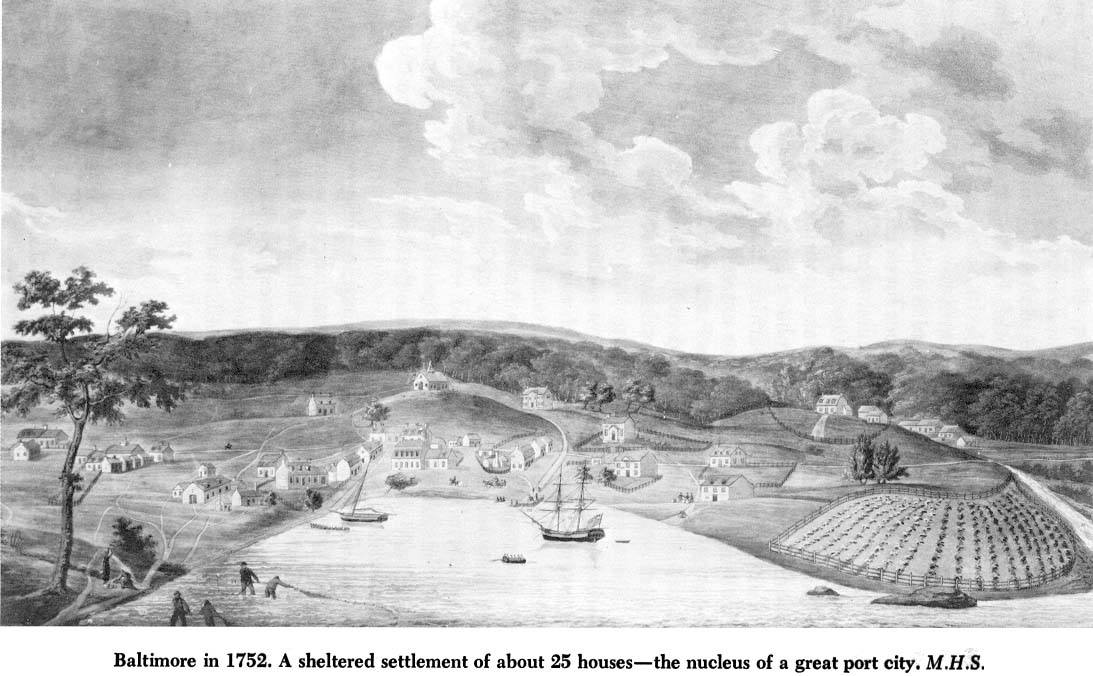
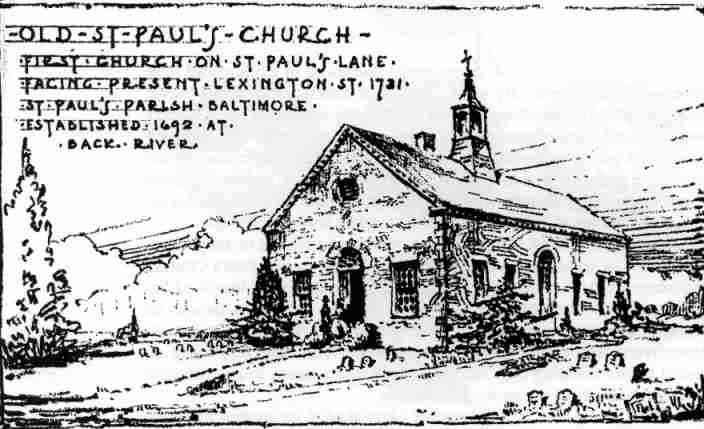
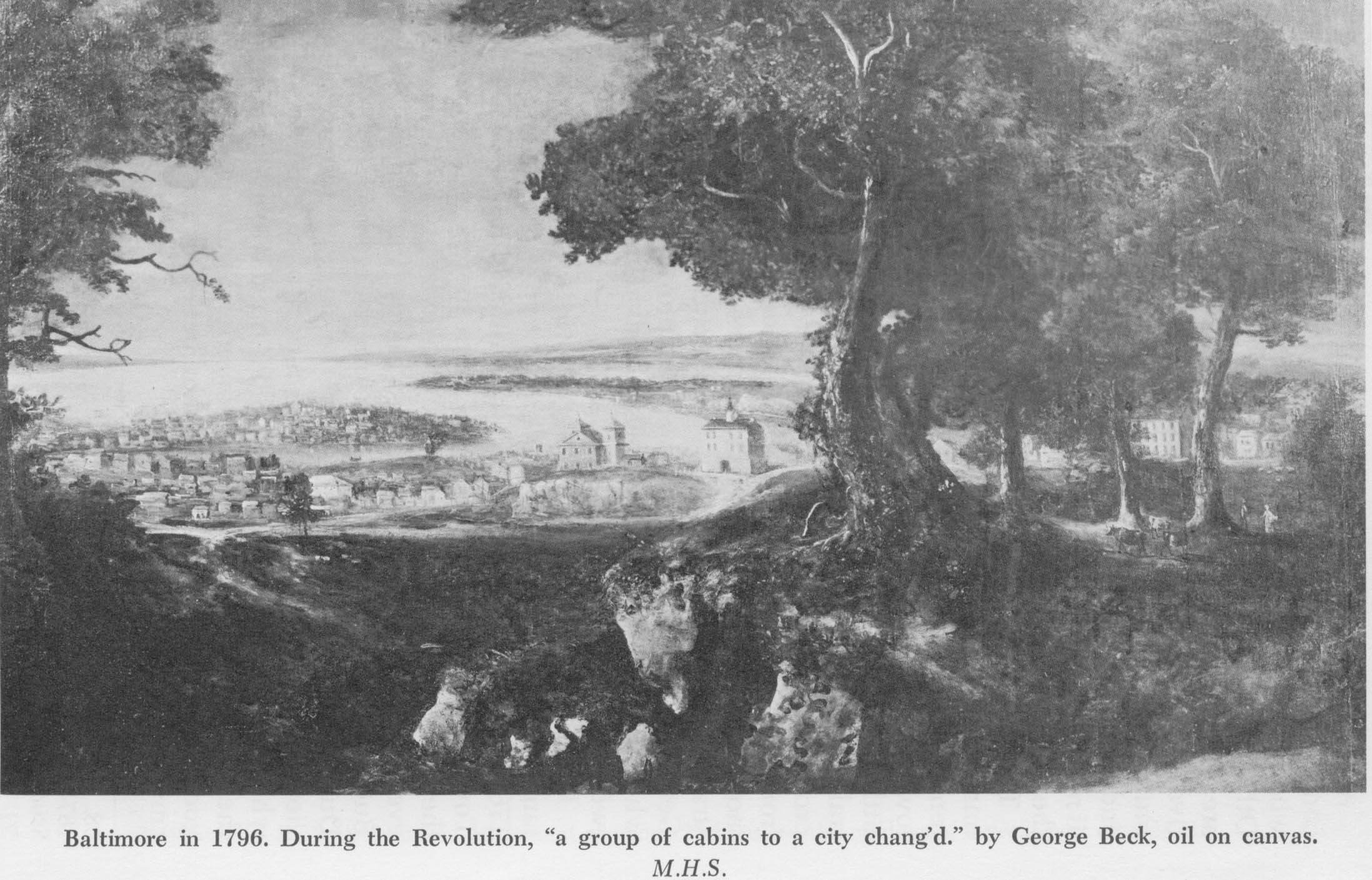
The site of the future busy port of Baltimore still appeared idyllic at the time when the families of Nicholas Haile and Charles Merryman settled near there.
The family had lived not entirely without luxury. Crowe (p. 6) tells us that Nicholas's younger son, another Nicholas, played the violin. This youth eventually moved to Maryland. Generations after him long continued to name a son Nicholas, so that to avoid confusion I distinguish them in these pages by region. Although the family remained anchored in Baltimore County, Maryland for several more generations, we can call this first one to move there
Nicholas of Baltimore (1656-1729)
This second American Nicholas registered his own mark for cattle and hogs in Lancaster County before he had completed his tenth year. That may be revelatory not only of priorities at a wilderness frontier, but may tell us also about the responsibilities laid upon one's shoulders at such an early age. Nicholas had just turned eight in the year of the comet, a phenomenon generally recognized as ominous. This one was followed first by an unprecedented infestation of pigeons, then by renewed Indian attacks. Governor William Berkeley insisted on careful diplomacy with the Indians, vetoing any except passive resistance to their onslaughts. To this end he had stockades built on the larger plantations. According to some, spending tax money in this way constituted ineffectual protection, mainly for the wealthy, but paid for by the labor of the poor. A young, newly arrived aristocratic firebrand, Nathaniel Bacon, claimed the governor was coddling the Indians to save his own investments in fur trading. Many agreed with Bacon, so that he was able to rouse highly successful excursions against the Indians. This gained him immense popularity among the common people, but the enmity of vindictive, unpopular old Governor Berkeley.
Nathaniel Bacon may have been saved from hanging only by his early death from disease and exposure in October, 1676. Historians (who like to choose sides) are divided about what they call "Bacon's Rebellion." Some call it a proper Revolution and praise the Long Assembly of 1675 for anticipating measures taken by the Continental Congress a century later. Other historians deny Bacon credit for that, and emphasize the prudence of old Governor Berkeley. In any case, the rapidity with which Bacon was able to raise his rabble army, the sheer size of it, and its initial successes cast a stark light on the desperate conditions still prevailing along the James River as the seventeenth century drew to an end.
Young Nicholas Haile was twenty years old during Bacon's Rebellion, scarcely ten years younger than Bacon. One naturally wonders what such an age difference might have meant to young men in those days. One could guess that Nicholas and his neighbors on the Corotoman were as enthusiastic about the dashing, courageous, and brilliant Bacon as were the impoverished rebels on the James River. Both young men were royalists, but Nicholas probably shared Bacon's grievances against the royal governor--if Nicholas was still engaged in tobacco farming at all.
But actually we do not even know that Nicholas was still in Virginia in 1675. After the death of his father (1672) it is recorded that "Nicholas Haile is gone away from his brother George Haile to his brother-in-law Henry King and estate to go to said King." The boy's older sister, Mary, had married this Henry King in the summer of 1668. Crowe's report that the couple moved to Augusta County (p. 5) is puzzling, since colonial settlement had not yet reached beyond the tidewater at this early date. Assuming that Crowe were right, then the dangers encountered on the frontier could account for Henry King's early death. And it is true that Nicholas's son and grandson did indeed settle in that remote wilderness--some eighty years later. But I am inclined to believe that Crowe's reference to Augusta County reflects only her source for her information (i.e., later descendants of the Augusta settlers). There is no evidence that Nicholas himself ever traveled that far, or even ventured in that direction.
It seems likely that Nicholas together with his older sister had probably left Virginia for Maryland before Bacon's Rebellion. In any case, they will have found similar disturbances there. A Complaint from Heaven with a Huy and Crye and a Petition out of Virginia and Maryland appeared in Baltimore in 1676. It is a list of grievances like Bacon's down in Virginia: a petition to the King of England, begging for royal protection against local administrative abuses. American impatience with the government bureaucracy continues to typify the family experience right on into the Carolinas at the end of the next century.
In the same court records from which we learn that the sixteen-year-old had brought along his share in the estate to his brother-in-law (Lancaster Court records, 12 Nov. 1672), the estate again turns up ten years later showing that Mary, by this time widowed, has married a Corotoman wheelwright named Charles Merryman (1682). Within a few years the couple left Virginia for Maryland, and young Nicholas came along with them. It was the beginning of a close family and business relationship which endured for more than a century. In Baltimore County, a son of Charles and Mary wed Jane Long from a family established there. Jane's sister Ann married Mary's nephew. I treat him, the nephew, below as the next in our line, Nicholas of Bedford. But the Merryman connection also grew closer during subsequent generations in Baltimore County. As the families spread out geographically, they must have looked back on Merryman's Lott and Haile's Fellowship (the site of Johns Hopkins University today) as their mutual family seat. During the war with England, young Hailes returned to Baltimore from Tenneseee. It was from Baltimore that Richard, Nathan, and Amon joined the Continental Army (choosing Pulaski's Legion, a cavalry unit). And it was to this "country estate" that Federal officers came to arrest John Merryman for treason At 2:00 a.m. on May 25, 1861.
Maryland
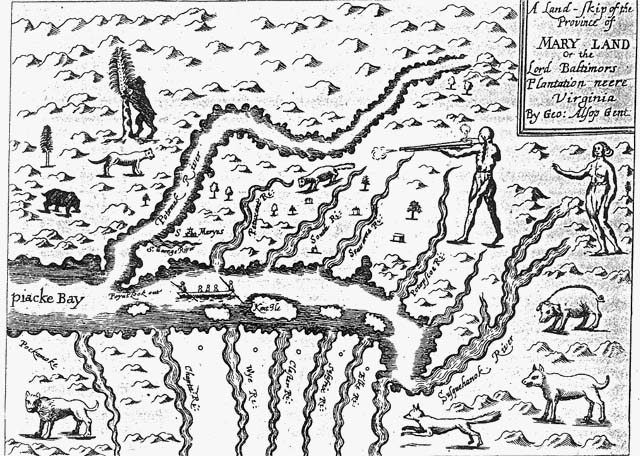
The map is taken from A Character of the
Province of Maryland by
George Alsop, one of those scoundrels who had been sent to
Maryland as
punishment. After serving his four years' sentence, Alsop promptly
returned to
England.
Nevertheless, he wrote in lavish praise of Maryland, and his book was
published
as propaganda in 1666 by the Calverts, whose grandsire had received the
royal grant to Maryland.
The earliest document for Nicholas's presence in Baltimore County does not turn up until 1702, attesting to the birth of a child there. But by this time Nicholas is an established citizen. In a land deed from 1707, he declares himself to be 50 years old. Crowe focuses on the marriage he has made to Frances Garrett, daughter of Dennis Garrett and Barbara Stone Garrett. She discusses the Stone family (pp. 10-13), prominent because they were related to the Calverts (the Lords Baltimore). Such good connections might seem to attest Nicholas's eligibility when he arrived in Maryland at a marriageable time of life (that is to say, rather earlier than later in the last quarter of the 17th century).
The site of the future busy port of Baltimore still appeared idyllic at the time when the families of Nicholas Haile and Charles Merryman settled near there.