PREVIOUS
 Flight to Texas

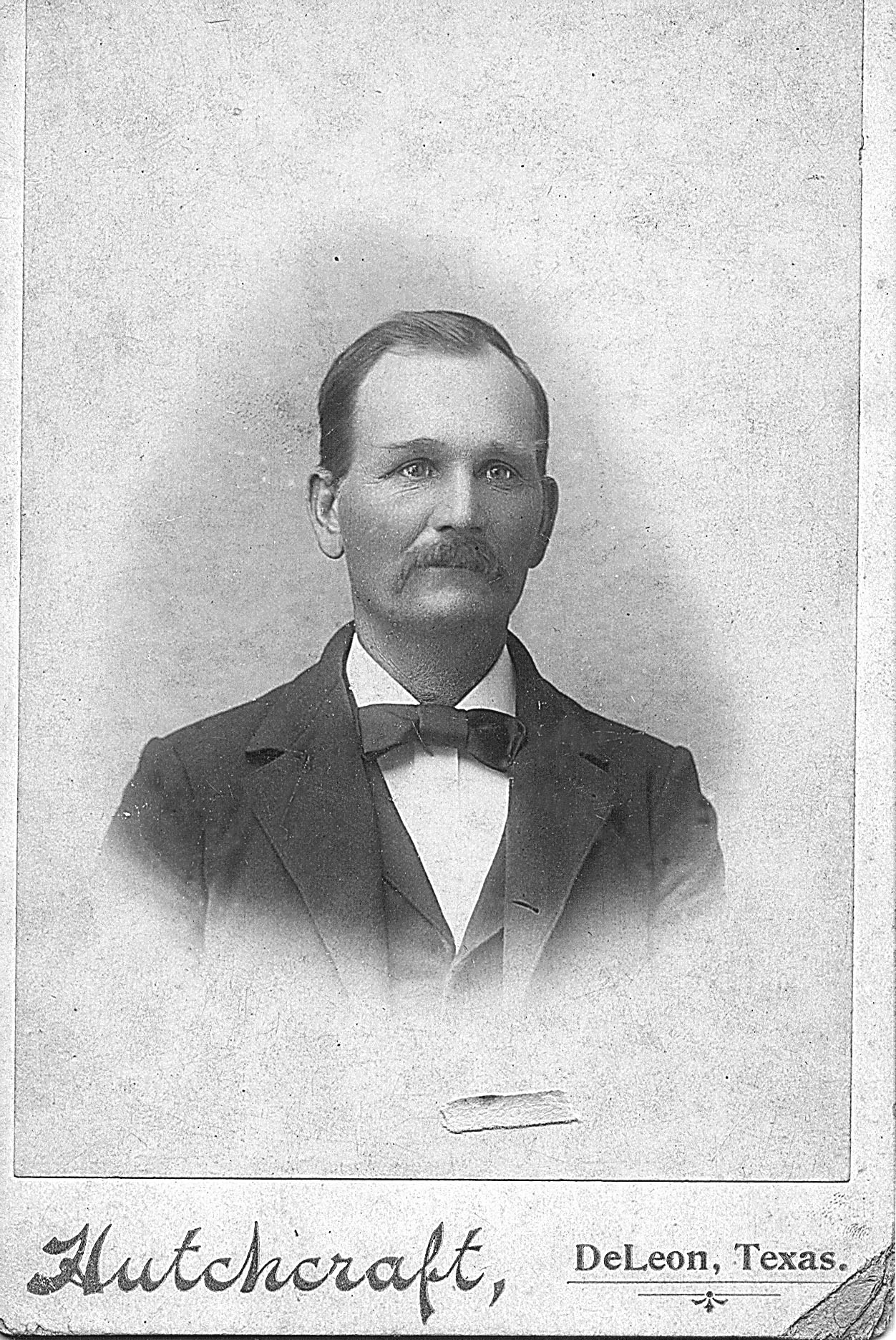
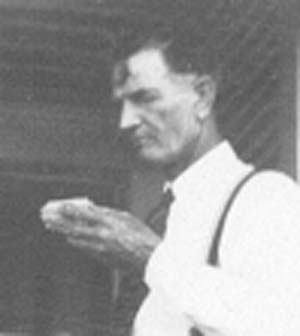
        Thomas ("R. T.," 1846-1931) was a boy when his home state became a battlefield.  He first served under General Felix Zollicoffer, who in 1861 was assigned to "preserve peace, protect the railroad, and repel invasion" in east Tennesee  and Kentucky.  The brief military career of this Nashville journalist may be typical of a "civil" war.  Zollicoffer was woefully nearsighted, so that when a skirmish brought him momentarily behind enemy lines, he looked indignantly upon the men around him and ordered them to "cease firing on your own men."  He was immediately shot dead, his corpse plundered for trophies.

         By that time, Thomas was probably under General Crittendon.  After the Battle of Perryville his troop accompanied  General Bragg's thousand-mile circuit down into Mississippi and back up to Murphreesboro, Tennessee.  In the cold, rainy days between between Christmas 1862 and New Years, they fought the Battle of Stones River, after which "Corporal Thomas Hail" is reported missing
(from Company D, 4th Tennessee).  He was imprisoned at Camp Douglas, where he celebrated his seventeenth birthday in April.  Perhaps he was exchanged, since his daughter reports that before being released at James City, Virginia, he was made a prisoner of war three more times, and wounded once.  He made it across to Camp Chase in Ohio in time to be present when his father died in the prison there in September of 1865 (the surrender had occurred in April).   Back in Tennessee, Thomas is said to have been the one who cared for his older brother Lafayette, incapacitated by "shell shock."  I have no further report of the young man until half a dozen years later a newspaper in Comanche, Texas reports the arrival "from Arkansas"  of one R. T. Haile.  Two years later it reports his acceptance into the Masonic Lodge.

         R. T.'s grandson Rudolph, an old man in a Texas nursing home, told me that R. T. had come to Texas on account of "serious trouble" (Rudolph suggested a killing).  Such a story might be in accord with the history of Texas, or so went the song:

Oh, what was your name in the States?
Was it Johnson or Thompson or Gates?
            Did you murder your wife and run for your life?
Oh, what was your name in the States?
But the Hailes came to Texas the same way they had come out of Virginia to Tennessee, as an extended family.  At least three of Amon's sons came to Texas after the War, and three of his daughters were brought there by marriage--all these were R. T.'s aunts and uncles.  Of his own generation, one brother and three sisters came to Texas.
  Unlike the earlier migration, however, when they all stayed together and intermarried with the same families (including cousins), the Hailes straggling into Texas were scattered like the dust over the Cross Timbers plains.

       
  Still, Rudolph's story may help us with the discrepancy in R. T.'s name.  R. T.'s daughter Pearl, having married into Texas oil money, entered R. T. into the Biographies of Texas.  Some of her information on him may be valid, but she is sometimes wrong, sometimes absurd.  She gave her father's name as Randolph Thomas.  Pearl's oldest son was the grandson closest to R.T.  He made a special trip back to the old man's home in Flynns Lick, and left copious notes in which he recalls his grandfather's name as Robert Thomas.  The name on the death certificate I examined in Eastland County is R. T. Haile, that is the name his sons knew him by, and it is the name inscribed on his handsome tombstone at Oakland Cemetery not far from Duster, Texas, a few miles south of old Sipe Springs.

        It is just possible that  "Randolph" and "Robert" are both faithful reports.  That is to say, it appears that the initial "R" arose only after the young man had left Tennessee.  The boy's father had called him Tom.  The 1860 Tennessee census enters the 14-year-old as Thomas.  It is Thomas Hail who is reported missing after the Battle of Stones River in 1863.  As a cattle man on the range west of the Brazos, he was known to hands as "old Tom Haile."   The first attestation I find for the initial "R" is that in the Comanche Chief of September 21st, 1873."  Tom Haile may actually be  one of the many who took a new name in a new territory, or at least a new initial.

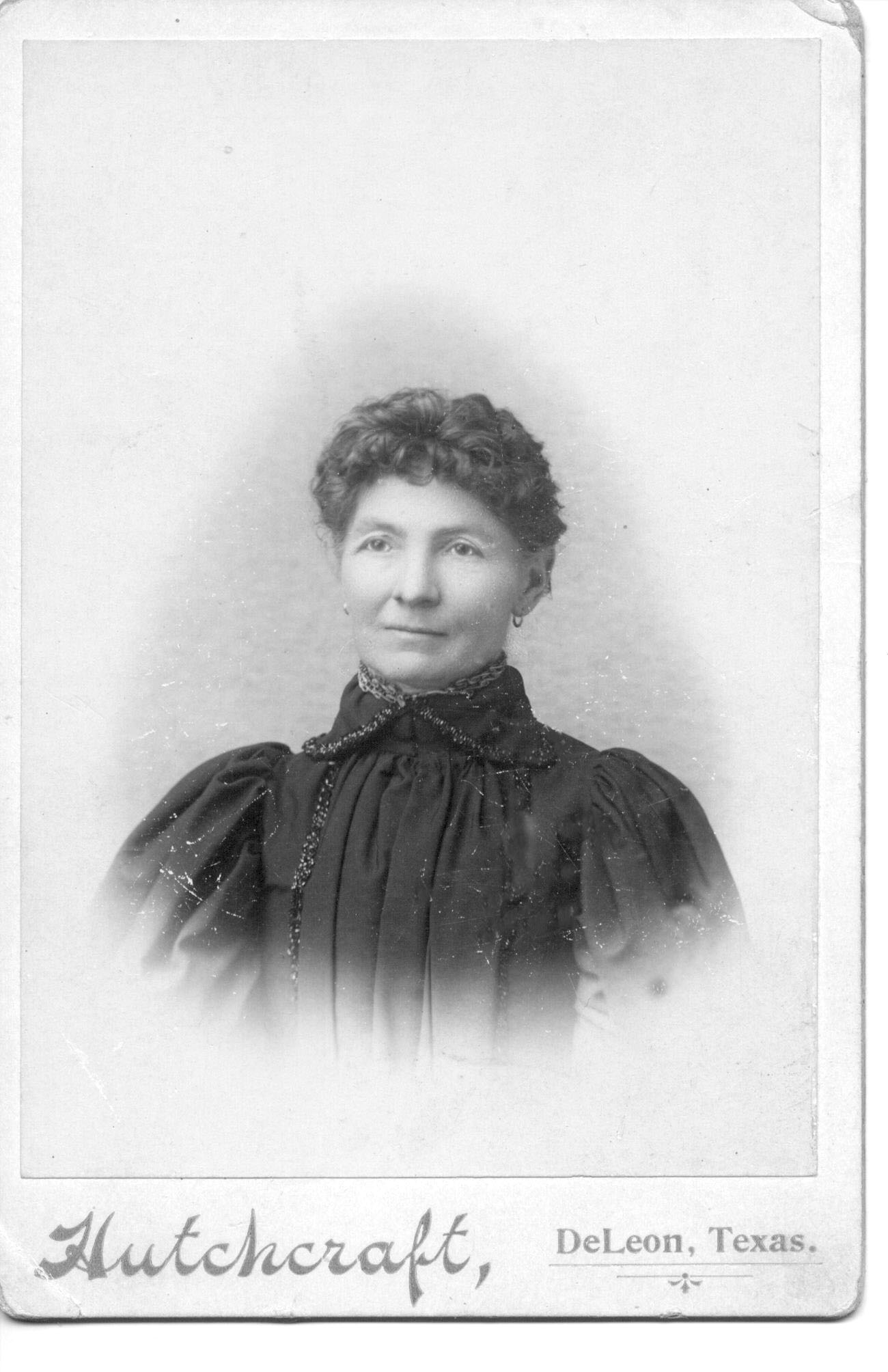
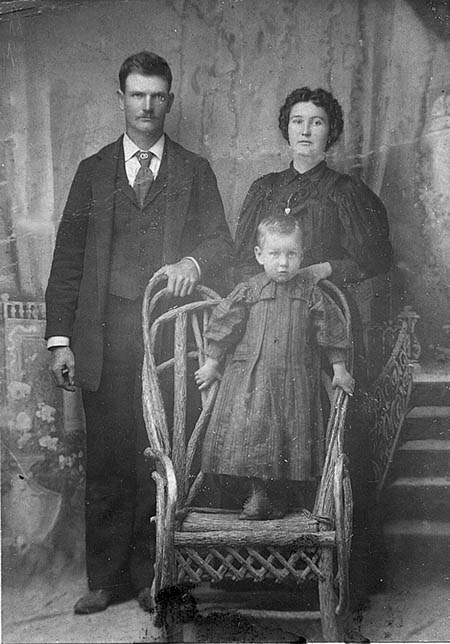
        His long trail from Tennessee brought R.T. through Nashville, Arkansas, settled by Virginians like himself.  Here he. married the tall and handsome Amanda Richards.  Broke, of course, the couple had set out for the promised land in Texas.   They raised some crops on the shares in Grayson and Fannin Counties up along the Red River.  By the time they arrived in Comanche County they had three children, Henry five, Mary three, and the one-year old Elvis Lafayette, my grandfather.

        Comanche was in an area called West Texas by the first few generations, simply because it was as far west as you might care to go.  The journalist A. C. Greene defends the designation in his remembrances of A Personal Country (New York, 1969).
  As R.T. found the Cross Timbers beyond the Brazos, it was still far from hospitable.  It was called the Comancherìa, for the Comanche Indians and their allies held sway beyond the Brazos from southern Kansas to the Pecos.  This desperate stone-age people was being systematically scourged by decimation of their buffalo herds and the steady advance of cattlemen.  But these accomplished horesemen had acquired the white man's arms, and were skilled thieves.  One of R.T.'s sisters, Aletha, told of her own encounter with two whom she caught slipping away with her saddle ponies.  Aletha shot them both dead.  That act is not itself so shocking as the young woman's coarse, unsympathetic way of telling about it. 

        R. T. himself was a
good story teller.  He liked to recall how on his way out to this arid region, during a drought and without water, he had come upon a huge fallen tree, and found plenty of water in the crater beneath its roots. He climbed down and drank his fill. Only upon crawling back up on the other side did he discover the carcass of a cow in the same puddle. "Sweetest water I ever drunk,” was his judgment. I do not think R.T. had the benefit of a classical education, but I did come across the very same story told about King Darius, ca. 500 B.C. A footnote admonishes that it was first told about Cyrus, his father. Well, many a traveler has been thirsty, and many a tree has fallen, over the centuries. Where better for man or beast to quench their thirst?


Cattle

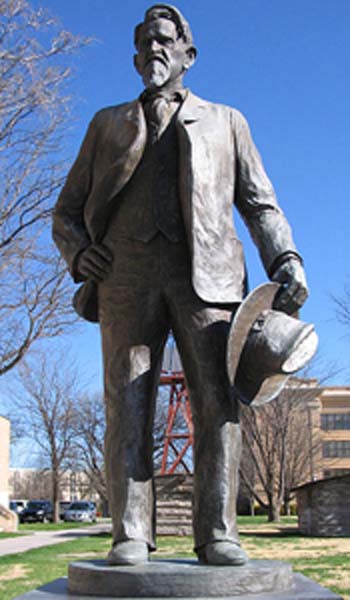
        The free range west of the Brazos had attracted settlers before the War.  The famous Charlie Goodnight had arrived in Palo Pinto County as a small boy from Illinois, and as a young man had begun to collect a herd of his own.  When President Lincoln withdrew the Federal troops, the Comanche Indians quickly drove most settlers out.  Goodnight himself, after fighting for the Confederacy
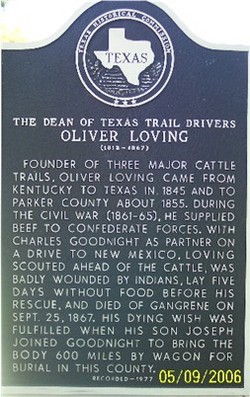
, returned to a desolate West Texas.  He "made the gather" of his own stock and whatever other cattle now grazed among scrub oak and prairie.  He became a partner of Oliver Loving, an older business man who already supplied the Federal troops with beef by means of cattle drives into Louisiana.  Loving and Goodnight now instituted profitable drives to railheads in Oklahoma, Kansas and Colorado.  R. T., just ten years younger than Goodnight, seized similar opportunity in adjacent Erath, as well as in Comanche County.

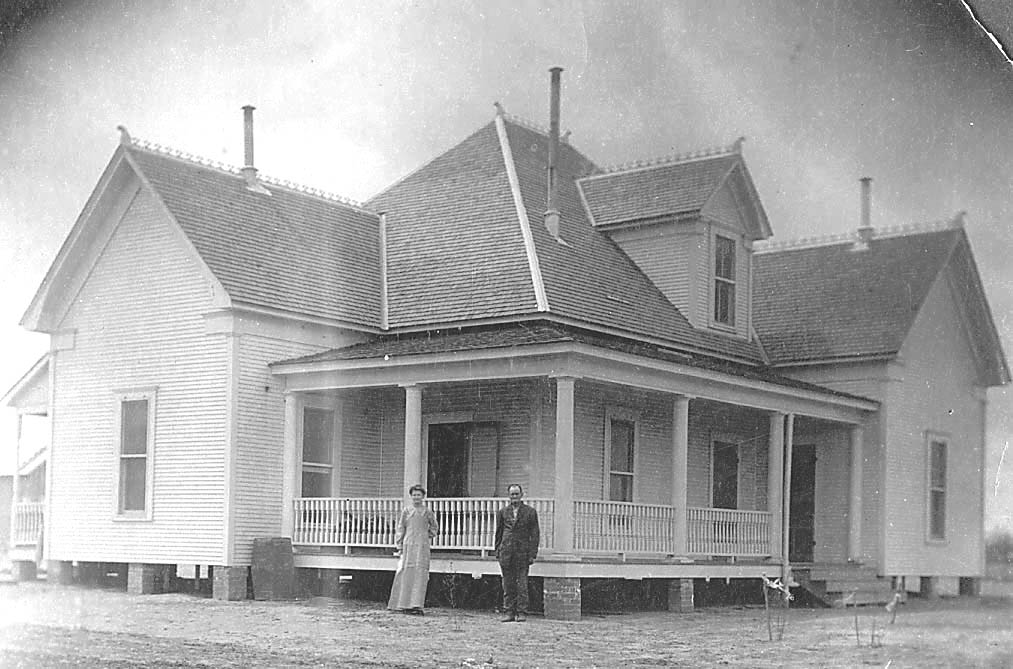
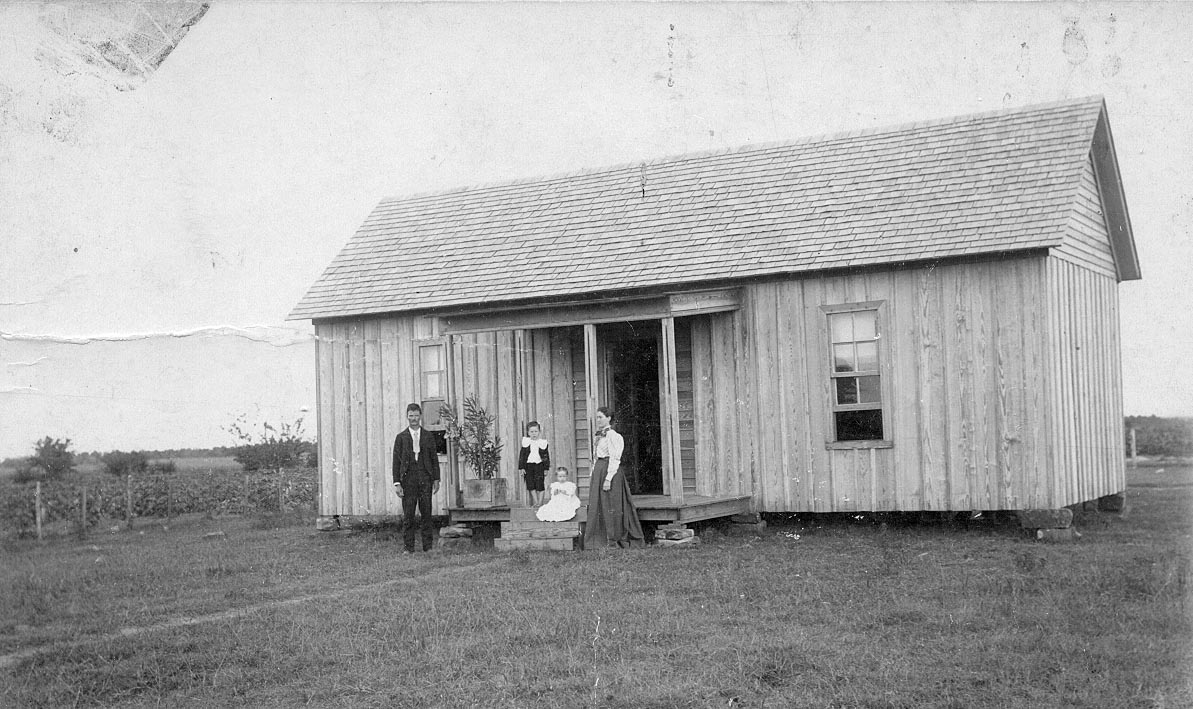
         Goodnight would eventually become a close friend of Quanah Parker, the last of the undefeated Indian chieftains, who was perhaps four years younger than R. T.  At this time, however, Quanah was on the war path.  The year of R.T.'s arrival in Comancheexperienced the last savage Indian rampages, scalpings and burnings of frontier families, and finally the Indians' cruel banishment to reservations in Oklahoma.  Such conditions help explain why Texas land was cheap. Actually the range itself was free, and so were, sometimes, the cattle.  R.T. maintained herds around the Sabana River. He was able to establish the first bank in Comanche County, of which I have taken pictures. It was recently removed from near Duster and is today on display at Sipe Springs.  He is said to have acquired a great deal of land, and to have given each of his seven children 500 acres. When nearby Desdemona became an oil boom town, he opened a bank there, too. I know of no oil interests held by R.T. himself.  His house still stands today, not far from old Duster.


 NEXT >

Contents                                                                                       Home