< PREVIOUS
Fate

        Evlis Lafayette
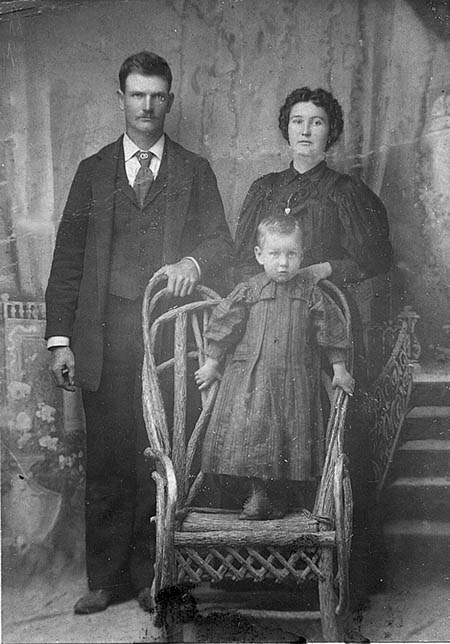
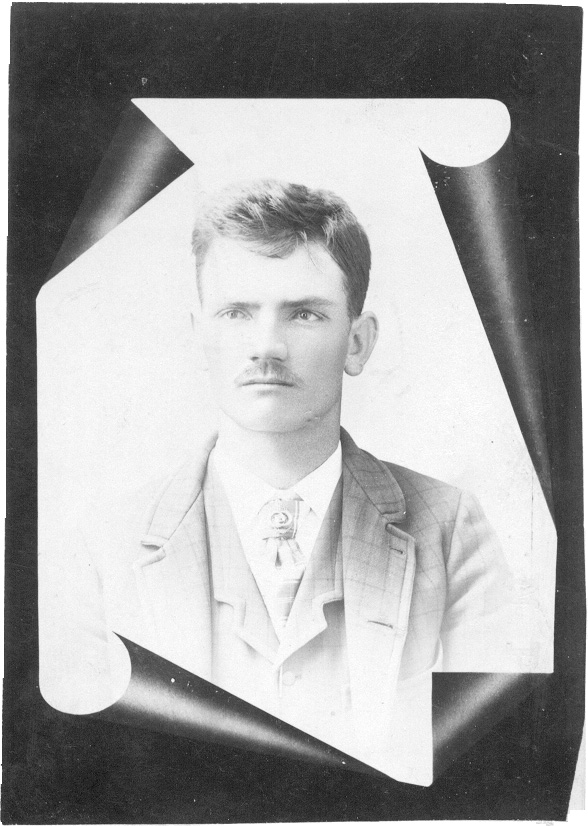
(1872-1931), named after an uncle and numerous others, going back to his grandfather's generation in homage to the French hero of America's War of Independence.  As in many American place names, "Lafayette" was accented on the second syllable, and in this case shortened to "Fate."  He died in the year of his own father's death, just shortly after I was born. A picture of him as a boy may suggest willfulness,


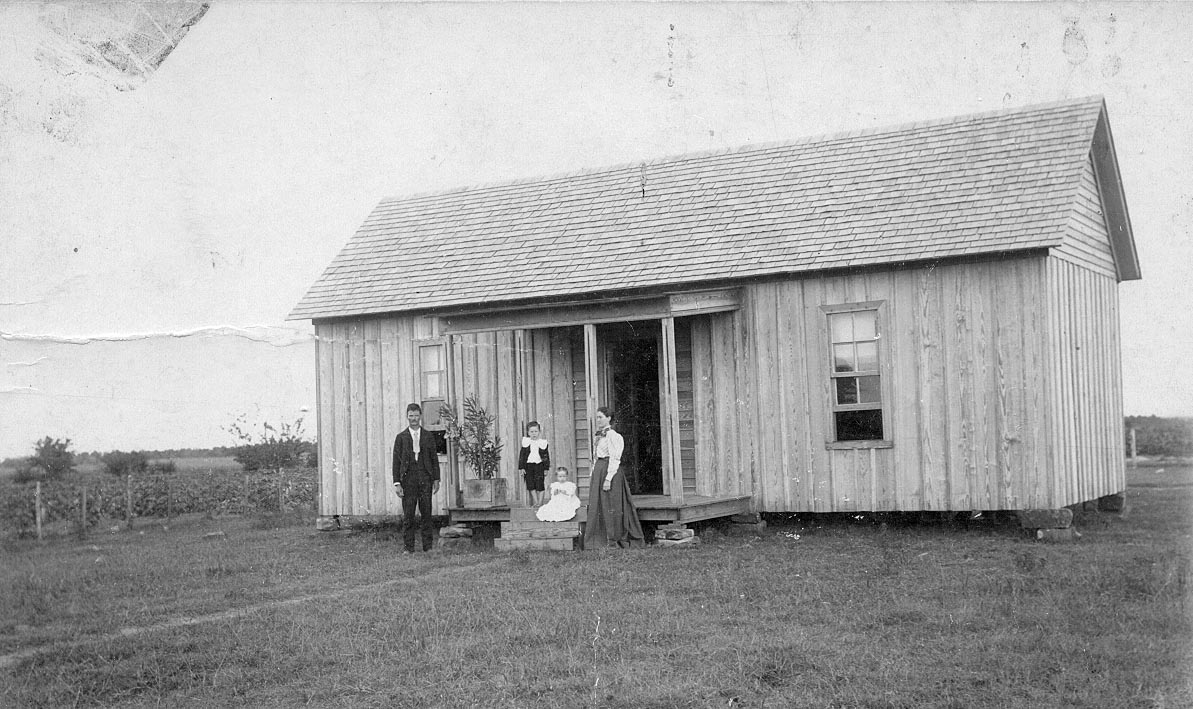
as does, no doubt, the professional photograph of the young family with their first child (b. 1894). But little can be inferred from these studio images, for which the subjects were required to remain motionless.   Here is probably the same porch where Laura told her grandson that she had "shot a panther."  That remark stuck in a small boy's memory,
of course.


Only years later, when I saw this picture, did I realize that the panther could not have actually been on her porch, but that she had probably shot from there, just at her door.  Still, it was enlightening for me to try to envisage my gentle grandmother--
a proper lady with the late nineteenth- century virtues of modesty, reticence, humility--confronting a panther, even at a hundred yards.  True, she had a set to her jaw when she insisted on "the right thing to do," and she was an astute domino player (she did not play cards, and found a subtle rascality in calling them "the devil's picture book")  I was impressed by the regimens in her life, how she had arranged her daily Bible readings so as to complete both Testaments once each year.  I loved to watch her at night, when before going to bed she took down her tresses to brush them as she sat before the big mirror of her dressing table.  They fell well below her waist and were still a rich brown, only streaked a little with white.
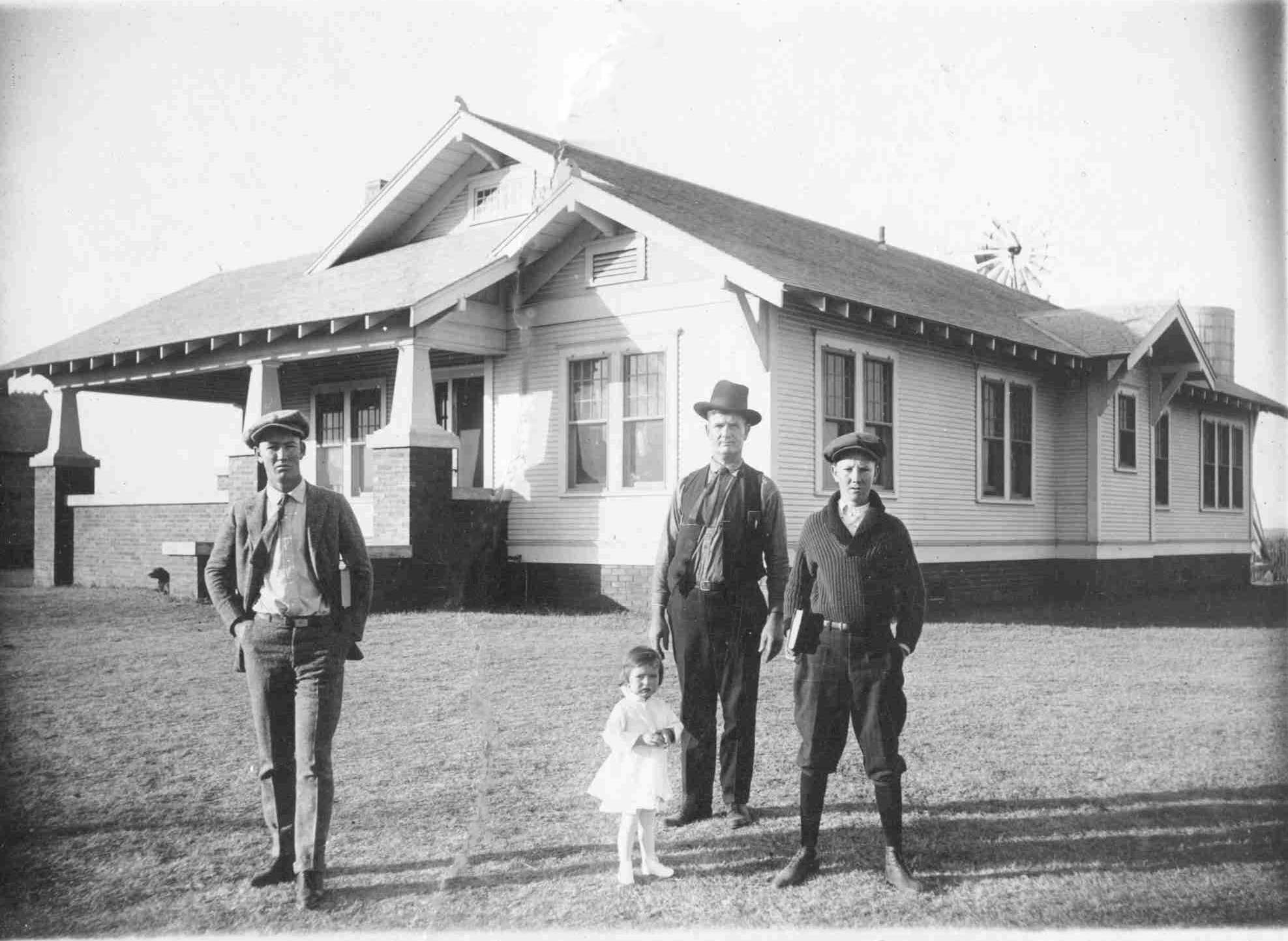
      Well, Fate was a hard worker. You have to say that for him.  His main business was cattle, but with his boys he raised cotton and grain, too.  I myself  have gathered nuts from his 80-acre "pecan bottom" on the Sabana, I have picked peaches from the orchard and grapes from the arbor behind his elegant house, about a mile out of Gorman. He is said to have built it himself, and he certainly did lay down its specifications of "a double floor," heavy timbers, etc. Here he is (ca. 1920) with his two younger sons Rudolph and Ardys. Two older boys were no longer living at home. The little girl is his first grandchild, Betty Joe.  She was beautiful.  Fate spoiled her.  She was a fine pianist.  She declared at an early age that she intended to "marry a millionaire,"  and she did.


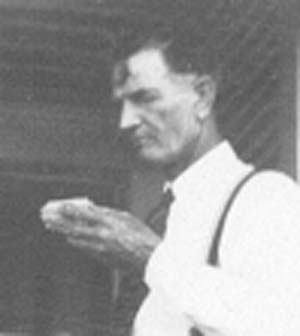
    Fate was remembered as a hard man, hard on his boys, hard on the land he worked together with them, and very obviously one of that generation who promoted the erosion which eventuated in the Dust Bowl. He raised cotton on soil so thin today that grass must struggle to grow. Laura Ann has told me she had to throw her own body down over her sons to "keep Fate from whipping them." He is quoted as having said of his daughter Gladys, who died of  a ruptured appendix, that he would have "no sawbones cutting" on a child of his. I got to know Fate from tales my father told. As a very young fellow Frank had been entrusted with "making a trade," one of the most treasured capabilities of that place and time, inherited no doubt from Virginia and Tennessee. Fate had sent him off to trade for some horses for the remuda, and Frank came riding home very proud of his negotiation and of the animals he was leading.  When his father rode out to meet him, to inspect the newly acquired horses, the first question was of course addressed to what kind of trade his boy had made. Frank told him, looking for praise. On the contrary: "'y God ye've ruined me."  I take the story not only as limning Fate's personality, but as revealing also something of the economics in which my own father grew up.  Fate died at a young fifty-nine.  Here he is toward the end of an apple.


     Fate's sons liked to recall him as fast with a six-shooter. They say he would let them toss a quarter into the air, unholster his pistol and shoot the coin out of sight while it was still overhead.  I would guess that the example may have been set by Fate's own father, also known among his hands as a hard driver.  Theirs was still that agrarian life which I earlier called "land-capitalism." But now the men folk did have currency at their disposal. Fate bought a new car every year, he sent his younger sons to college at the nearby military academy. Rudolph was a star football player, suffered the rest of his life from injuries received on the playing field and in several air crashes.  He was a "barnstormer," also gave flying lessons at
the airport he operated in Austin. The youngest, Ardys, spent his life in the peacetime U.S. Army.  The two older boys were too bright to go to college.  Erin / Aaron was sharp. They called him "the Dealer," perhaps because he was good at cards, or maybe because his Ford dealership in town burned during the Depression.  Looking back, these are the first fathers in our line who come into view, and they tempt us to form a judgment. Shall we assume that Fate and R.T. were following a tradition handed down from Amon and from the Nicholases before him? Or perhaps we are seeing in these two Hailes merely the temper of their own times?  These, after all, were the fellows called upon to make the transition from agrarian life, which had prevailed for a quarter millennium on these shores alone, over into a world now dominated by business and industry. 

NEXT >


Contents                                                                       Home