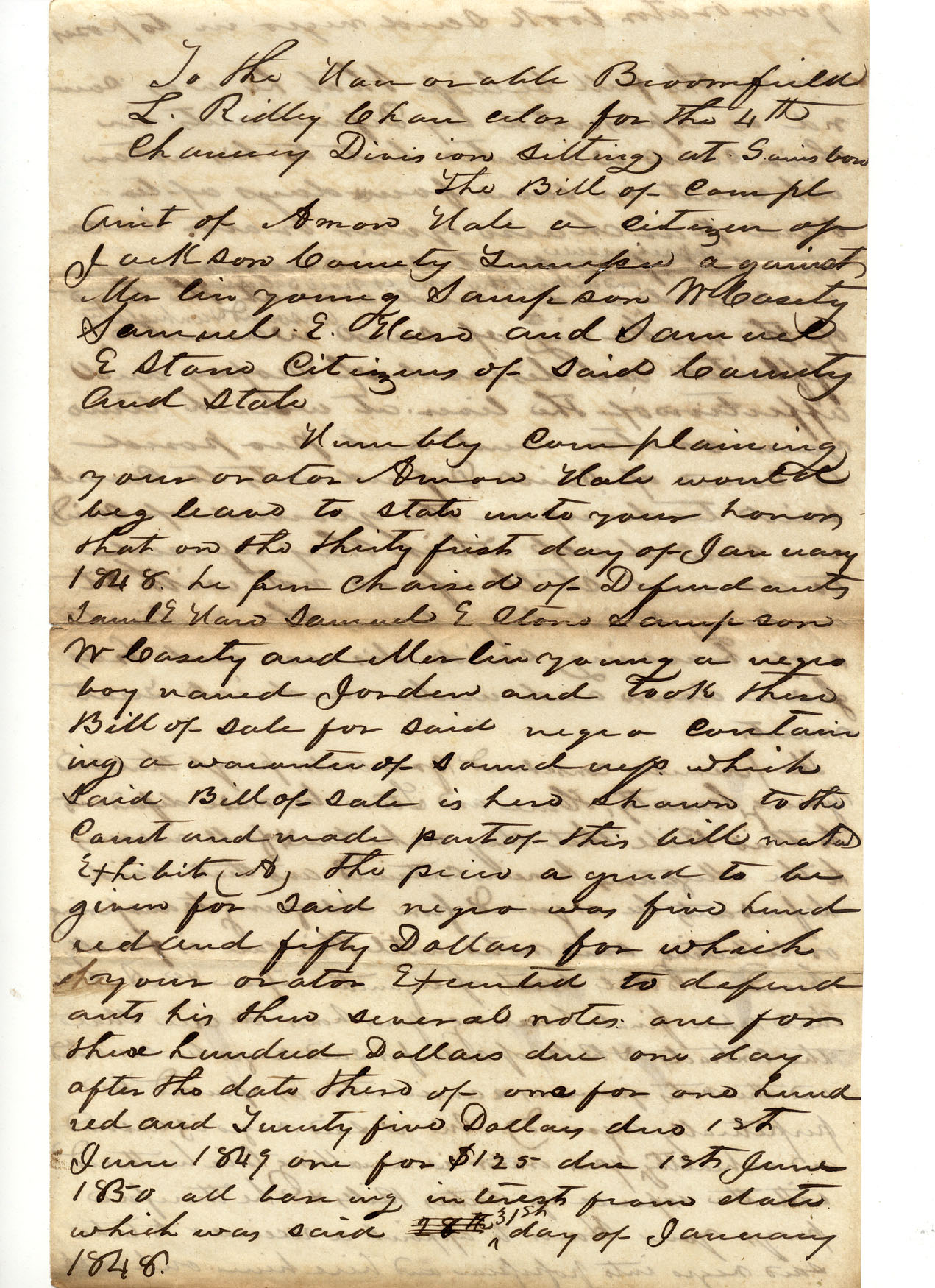
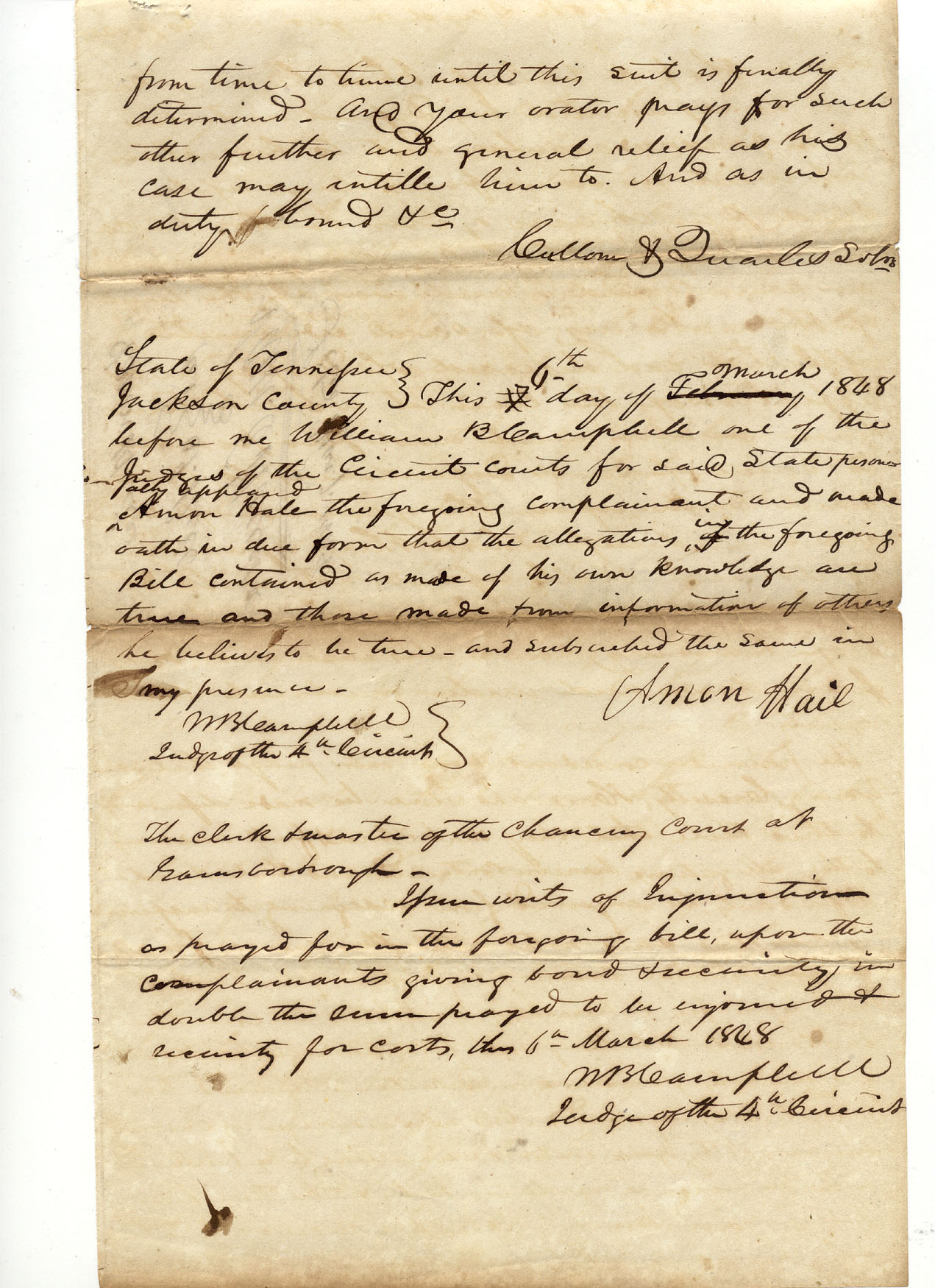
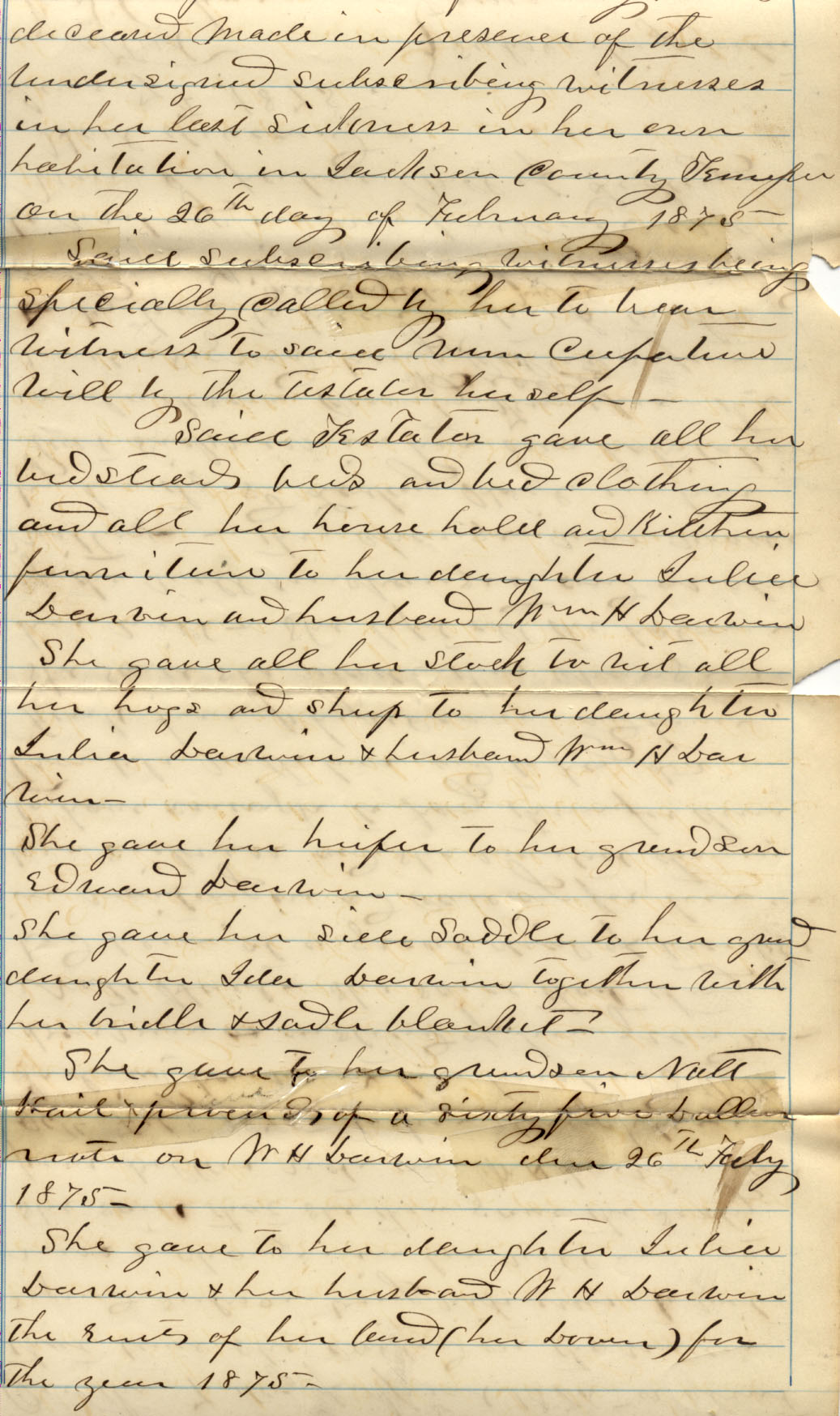
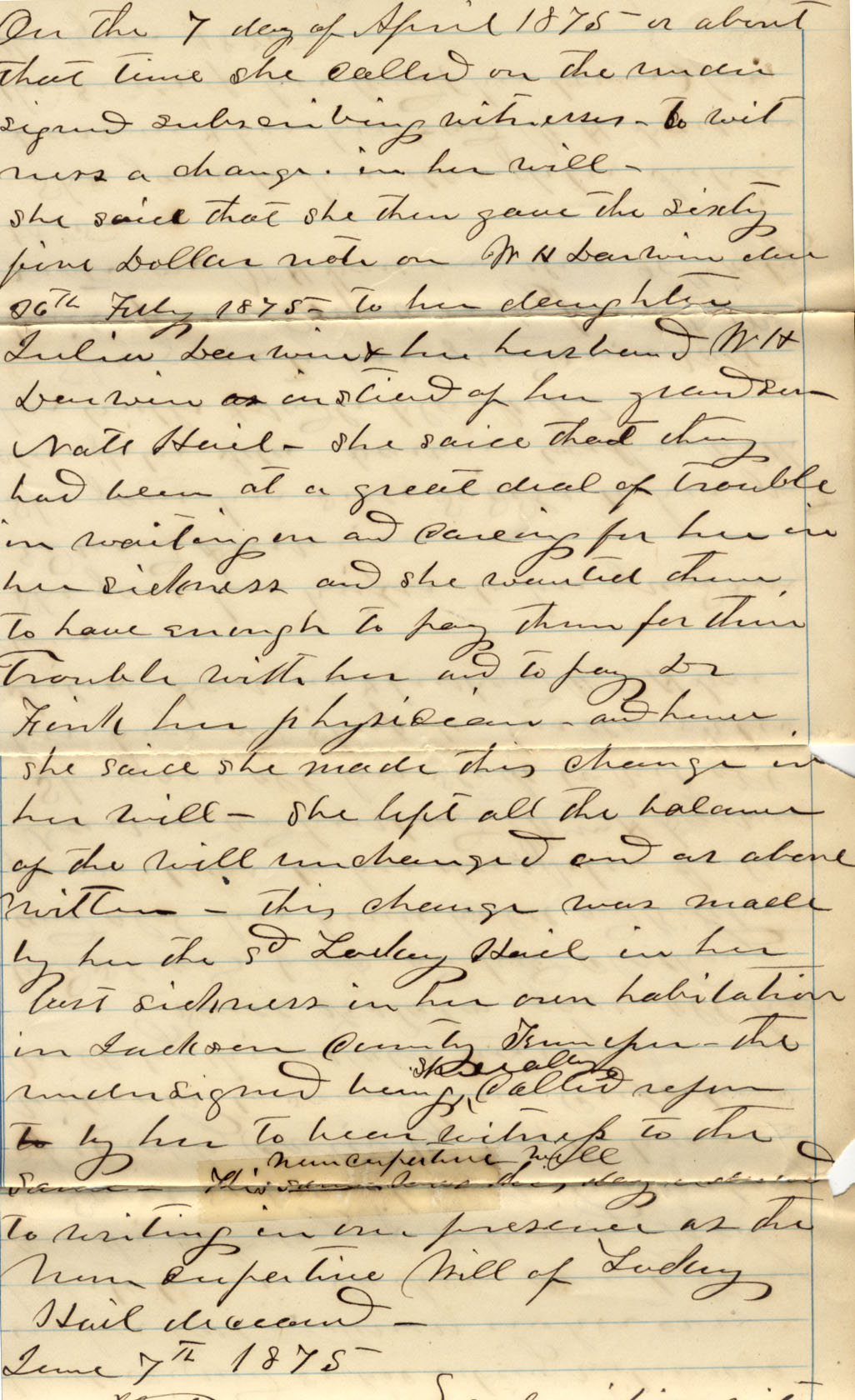
The Problem of Slavery
Seventeenth-century "adventurers" to
Virginia enjoyed
their land grants at the pleasure of the grantor and ultimately of
their king. The England of their origin had been since time out
of mind a
feudal society.
Men were bound to the land, and then to the
hierarchy. A change in monarch need
not constitute a change in the lord's ties to his vassals, or
the vassals' bond to the land. To be sure, the Magna
Carta (1215) had tempered feudalism for free men, and by Nicholas's
day two thirds of Englishmen were free, but perhaps not yet in our
sense of the word. Such incisive
documents for our present day thinking as the Habeas Corpus Act
(1679) and the Bill of Rights (1688) were still in the offing. Nicholas on
the Corotoman had a traditional view of his own condition and
that of the servants whom he
had transported. After he arrived
in Virginia he, his sons, and grandsons continued to bring over
indentured servants as a part of
acquiring more land. Their servants were not
bound for life. At the end of their contract
(indenture) they could go out and get land of their own.
Landlords proliferated in America. So did their options. Africans could be found
among the indentured servants by the end of
the century,
and also among
freeholders.
As the economy
remained focused on the land and the labor, one can trace the the
gradual inclusion of Africans as chattel, and see how the two
forms of servitude overlap by the time of Nicholas of
Watauga.
.
Probably at no time in
history had any civilization thrived without slavery in some
form.
The new
element in Amon's generation, the sixth in America, was the advent of a
new technology. Throughout history
every
new technology: now in the form of a plow, a horse
collar, the
stirrup, now as a compass, gunpowder, or moveable type, now as the
steam-driven cotton gin--all had continually required
accommodation
and adaptation by the multitudes it affected. That is because any
advantage
seized by one man is
at first offset by disadvantages to others, so that change entails
human misery. So did the cotton gin.
Given time, benefits from a new
invention do eventually
spread, despite all
selfish efforts to
the contrary. Ironically, the new application of industrial
technology to
agriculture was to make possible a first affluent
civilization without slavery. The turbulant wake, however,
of this radical change was concentrated
within only
one generation, Amon's. The huge advantages were first seized by
land speculators, developers, and slavers. Was not judicious,
gradual accommodation possible?
Democracy
A quick, obvious answer might be
that democracy can never favor disinterested decision making. Balanced, judicious
decisions, so easy in authoritarian regimes, are impossible in a system structured to balance interests by popular vote.
Shortly before Amon's birth and just before the invention of the cotton
gin, Americans had shaken off the old authoritarianism. Now the
telegraph rattled out instant opinion, newspapers prompted mass
decision
making. When cotton slavery in the
south aroused widespread emotional revulsion and outcry, especially in
Eli Whitney's home state of Massachusetts, the impassioned sentiments
quickly proved decisive.
When Amon was a boy, the new government in
Philadelphia
had been characterized by
patient,
deliberate
compromise. He grew into a young man admiring the great
compromisers, John Jordan Crittendon, Henry Clay, Daniel Webster, but
regional differences
were becoming more pronounced. Amon was probably one of
those enthusiasts
about Andrew
Jackson's radical
democratic fervor. He no doubt cheered James K. Polk's
energetic expansion of his nation from
the Rio
Grande to the Pacific to Canada. Factionalism had become more
intense, but
by the middle of the century Americans
were
confident
and optimistic. From
tidewater
colonies,
they had by now driven rapidly from coast to coast, first territorially
by banishing the British, the French, and the Spanish empires from the
continent,
then with steamboats on the great waterways, with
railroads
across
the prairies, and finally by telegraph wires strung from town to
town. All
this
came about during one man's adult years. Among the famous men
born in the year of Amon's birth were two who opened up Texas, Stephen
F. Austin from
Missouri and Sam Houston from
Virginia. James K.
Polk,
born
not far from Amon in North Carolina and just two years later, annexed
Texas,
settled the Oregon dispute, and acquired California, to extend the
nation's
boundaries from the Gulf of Mexico to Vancouver.
Some
Americans of Amon's day honestly called all
this their own "manifest destiny." Others feared the expansion of
the agricultural, hence slave territory within the United States.
It provoked what may be Abraham Lincoln's first speech before
Congress on January 12th, 1848 (he had been elected Congressman in
December of 1847. The context was Mexican sovereignty, but
he spoke in absolte terms:
Any
people anywhere, being inclined and having the power, have the right to
rise up and shake off the existing government, and form a new one that
suits them better. This is a most valuable, a most sacred right—a right
which, we hope and believe, is to liberate the world. Nor is this right
confined to cases in which the whole people of an existing government
may choose to exercise it. Any portion of such people that can may
revolutionize, and make their own of so much of the territory as they
inhabit. More than this, a majority of any portion of such people may
revolutionize, putting down a minority, intermingled with, or near
about them, who may oppose their movement. Such minority was precisely
the case of the Tories of our own Revolution. It is a quality of
revolutions not to go by old lines, or old laws; but to break up both,
and make new ones. As to the country now in question, we bought it of
France in 18O3, and sold it to Spain in 1819, according to the
President’s statements. After this, all Mexico, including Texas,
revolutionized against Spain; and still later, Texas revolutionized
against Mexico. In my view, just so far as she carried her revolution,
by obtaining the actual, willing or unwilling, submission of the
people, so far the country was hers, and no farther.
Jan 12, 1848
President Elect Lincoln wwas
to face, thirteen years later, almost to the day, exactly the situation which the freshman Congressman here defines so
precisely and thoroughly.
North vs. South
South Carolina,
already the most rambunctious when a colony, withdrew from the
Union (December, 1860). Mississippi, Florida, Alabama, Georgia,
Louisiana, and Texas had followed by the end of January, before Lincoln could be inaugurated. Still, most people
were hoping for settlement by compromise, as had been the
case in previous threats by other sections of the country.
Amon may have shared the attitude
most prevalent:
uncertainty about the new president, disdain both for the secessionists
and for the abolitionists. People in Amon's Tennessee, like those in
Virginia, Kentucky, North Carolina, Arkansas, and Missouri, saw no good
reason to
withdraw from the Union, where family sentiments and their
practical
interestsbound them. Nor could anyone conceive taking up
arms against their neighbors to the south. Their confident hope was
that Virginia would lead the upper South to a moderate
middle position, making it foolish for the alienated
states to remain so for long.
A precarious balance was tilted on April 12th, when the confusion
surrounding Fort Sumter led to open hostilities. Firing on the fort enabled / provoked
the new president to call up troops on April 15th. That in turn
precipitated
a convention at which Virginia, Tennessee, North Carolina and Arkansas
passed an ordinance of secession on May 23rd. Within hours
Federal troops invaded. At
Alexandria, just outside the District of Columbia, a young colonel took
down a Confederate flag from over an inn and was shot down by
the innkeeper, who was instantly shot, bayoneted, and bludgeoned to
death. The scene portended disaster.
But still for a year and more
Lincoln's
generals
showed little
enthusiasm
for inflicting
further violence across the Potomac. And farther afield,
what might
they
find to attack? The last of the Creek and Choktaw had recently
been
slaughtered by Federal troops, their towns in Tennessee,
Alabama,
Georgia and Mississippi burned while Amon was still a young man.
Under
Jackson's presidency the Cherokee had been driven down the legendary
Trail of
Tears
into Arkansas, leaving a southern countryside still densely forested
and
pastoral. When President Lincoln at last found generals willing
to prosecute his attack,
there
was no defending such a landscape against a developed nation equipped with
modern
arms. Even the most passionate resistance was doomed.
Nevertheless,
more boys were killed than in any other American war, partly because
medical
skills were as ineffectual as the Confederacy's antiquated
flintlocks.
Amon lived to see his homeland devastated, his children imprisoned,
wounded, killed, and
scattered. But he survived the conflict and even lived to see a
fellow Tennessean
succeed Lincoln as president.